|
|
History
For nearly 70 years, Brüel & Kjær has been playing a leading role in the world of sound and vibration, by producing precision instrumentation for acoustic and vibration measurement, and by contributing heavily to the development of acoustic and vibration sciences themselves. Many of our employees are world-renowned experts in their respective fields and are often asked to speak at seminars and conferences, and advise on new standards. But our expertise doesn't only come from within our organisation; it also comes from working closely together with customers and partners to help solve problems.
Pioneers and innovators
Innovation has always been the core of our business. We’re proud of this tradition and continue to develop and face the challenges posed by our customers.
See our pioneering and innovative products presented in a four-minute video
Milestones
From the world's first charge accelerometer to innovative solutions and advanced analyzer systems - Brüel & Kjær has been a part of the development from the very beginning. - Early Days
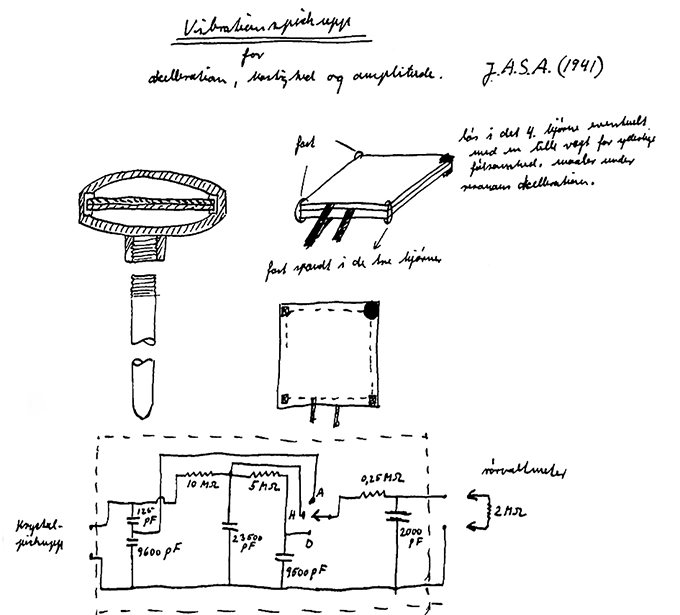
- In 1943 Brüel & Kjær launched Type 4301 - the world's first charge accelerometer - and entered the world of vibration measurement
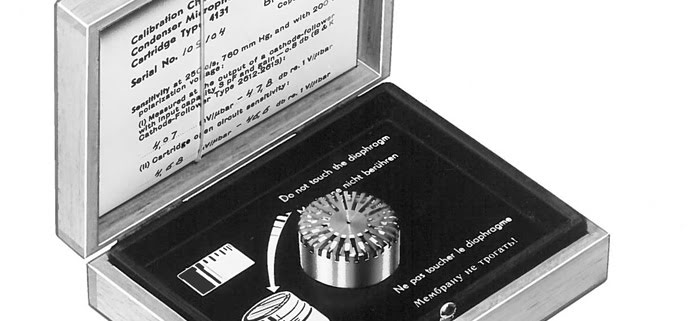
- One of Brüel & Kjær's major achievements has been the design and production of measurement microphones that have defined new standards for stability and measurement accuracy. The first range of measurement microphones was produced in the 1950s. Brüel & Kjær microphones are still the standard to which all other microphones are compared.
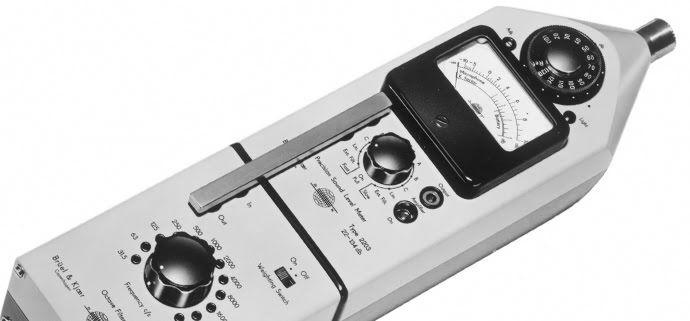
- Sound Level Meter Type 2203 was introduced in 1960 and marks the beginning of the era when sound level meters were made commercially available. Based on the same design, Type 2204 added a 'hold' function and an impulse detector in 1969. Two years later Type 2209 added a peak detector. More than 32,000 units were sold in total.
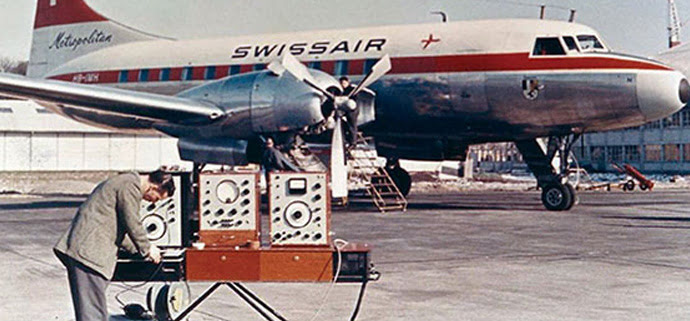
- Airport noise is not a new problem - in 1966 the world's first Airport Noise Monitoring System was installed in Toulouse, France. It consisted of several units of the Outdoor Microphone Type 4921, set up to measure around the airport in order to enable better noise abatement procedures and reduce the overall noise level.
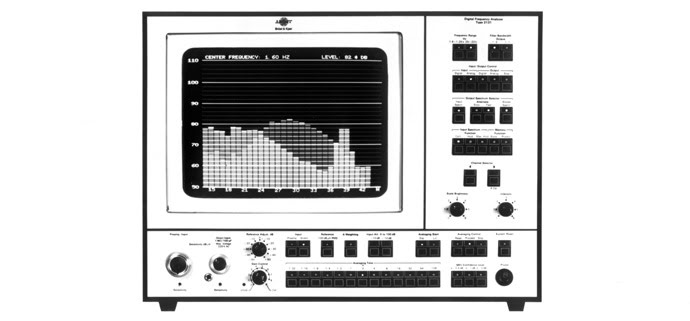
- 1977 - Digital Frequency Analyzer Type 2131 was the world's first 100% digital filter analyzer and designed to measure and display octave and 1/3-octave spectra in real-time. Some of the components performed beyond their specifications. The magic word was 'digital' as reliability increased by a factor of ten, and the test and calibration time decreased by the same factor.
- 1980s
- Sound Intensity Analyzing System Type 3360 including Sound Intensity Probe Type 3519 for real-time analysis of continuous and impulsive signals was released in 1982
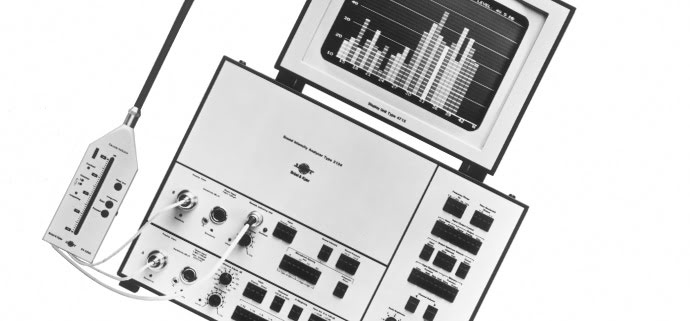
- 1983 - Dual-channel Signal Analyzer Types 2032 and 2034 offered system analysis and several new functions and features such as digital zoom, Hilbert Transform, sound intensity and a menu-based user- friendly interface. Type 2032 became the preferred FFT analyzer in the sound and vibration market.
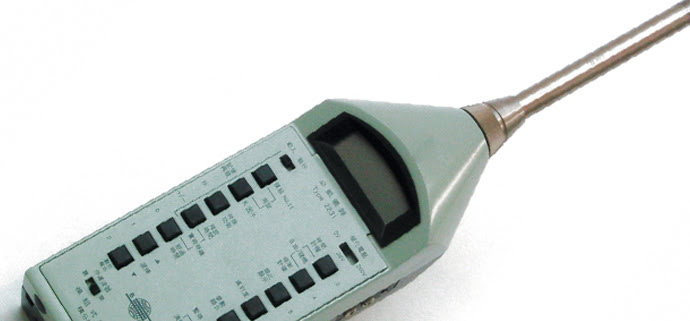
- Sound Level Meter Type 2231 made its debut in 1983 and changed the sound level meter market. It was a programmable platform, and during its more than ten years in production a large range of application modules were released such as logging, room acoustics, infra/ultra sound, human vibration and more, making Type 2231 the undisputed leader.
- In 1986 the first system for Spatial Transformation of Sound Fields (STSF) was sold. It was developed to meet a growing demand from the automotive industry, where R&D engineers wished to calculate acoustical parameters such as sound pressure and sound intensity at specified points, from measurements made close to the engine or vehicle under test.
- 1990s
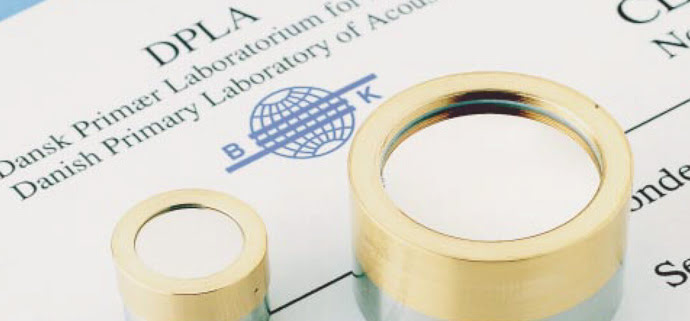
- In 1991 the Danish government commissioned Brüel & Kjær to operate the Danish Primary Laboratory of Acoustics (DPLA) in association with the Danish Technical University
- Sound level meter design was drastically changed when Type 2236 was introduced in 1993. Not only was this integrating sound level meter highly successful in its own right, but it also formed the basis for a number of other sound levels meters such as Types 2237, 2239 and in particular 2238 Mediator - adding modularity to the platform.
- In 1994 Modular Precision Sound Analyzer Type 2260, better known as Type 2260 Investigator, first saw the light of day.Using digital signal processing on a PC platform (the PDA of its day) Type 2260 Investigator set the trend in the high-end market. Much more than a sound level meter, advanced applications such as building acoustics, sound intensity measurements and FFT analysis have been launched on this versatile platform.
- In 1995 - Brüel & Kjær entered the noise calculation market with the Predictor third-generation calculation software, and with the driving idea to support calculations with measurement data. This entry coincided with the global growth of the market, and subsequently led to the formation of our Prediction Partnership that changes the way these product types are sold, supported and delivered.
- In 1996 we introduced what was to become the analyzer backbone of Brüel & Kjær - the Windows-based PULSE, Multi-analyzer System Type 3560. It included the groundbreaking concept of multi-analysis, meaning that you could perform all your analyses simultaneously while you monitored your results as they happened on-screen. This flexible, scaleable and open sound and vibration measurement and analysis system has sold more than 10,000 units to date.
- 1999 saw the Brüel & Kjær/ENDEVCO alliance. ENDEVCO's expertise in shock and vibration measurement combined with Brüel & Kjær's acoustics proficiency and its product marketing/distribution network gave customers a single-source supplier that they could depend on for quality products, on-time delivery, and outstanding technical support.
- In 1999 the PULSE concept took the next great leap forward with the introduction of a completely new line of acquisition hardware ranging from a battery-operated two-channel portable front-end, to the 128-channel laboratory system.
- 2000s
- The year 2000 saw the inauguration of Brüel & Kjær University, the global competence centre for sound and vibration. It offers basic and advanced courses and product training within a broad variety of applications, theories and products.
- 2002 saw the introduction of a beamforming solution for quick, one-shot mapping of large objects. It consists of a ghost-image free beamformer (the patented Array Wheel) and beamforming software for PULSE.
- In 2003, the Omnidirectional Volume Velocity Source based on the Omnisource Type 4295 was released. It covers the most important frequency range for the automotive industry – from 50 Hz to around 6 kHz.
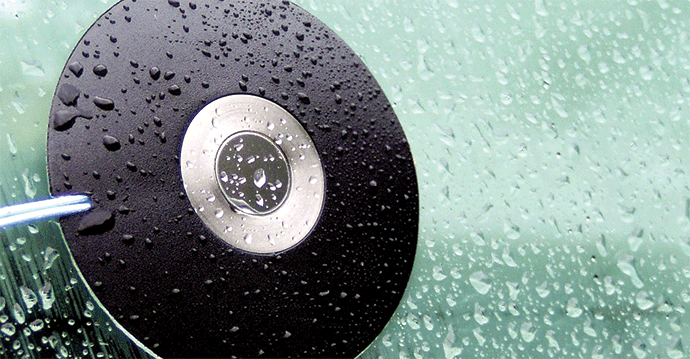
- 2004 saw two major innovations: Hand-held Analyzer Type 2250 which has been awarded several prizes for its combination of excellent ergonomics and attractive design, and the groundbreaking Surface Microphone Type 4948 – the first product based on Brüel & Kjær’s new, patent-pending, microphone-manufacturing technology. It was developed in cooperation with Airbus to measure sound pressure (noise) in limited spaces and where flush mounting of conventional microphone/preamplifier combinations would be impossible or cause undesired side effects. An automotive version is also available.
- In 2005, the Statistically Optimal Near-field Acoustical Holography (SONAH) calculation method overcame the two major limitations of the Near-field Acoustical Holography (NAH) calculation method. The ability of SONAH to support holography measurements with small arrays also allows real-time holography to be made with a small array probe. Meanwhile our unique Dyn-X technology allows measurements over a single 160 dB voltage range, eliminating level-setting runs, overloads, and measurement of system noise instead of the transducer signal.
- 2006 - Response Equalisation Extreme (REq-X) – a new technique that allows users to flatten and stretch the frequency response of accelerometers, microphones, and couplers in real-time, extending the frequency range in which the transducer can be used and improving accuracy of the measurement
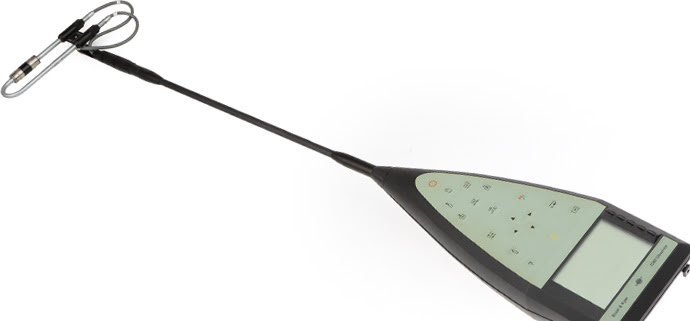
- In 2007, we introduced Hand-held Analyzer Type 2270 - the world's most advanced two-channel hand-held analyzer
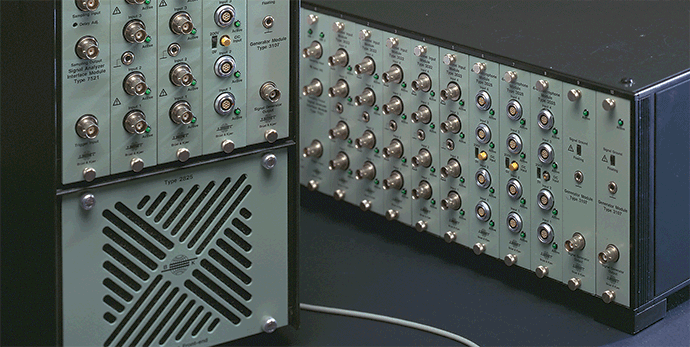
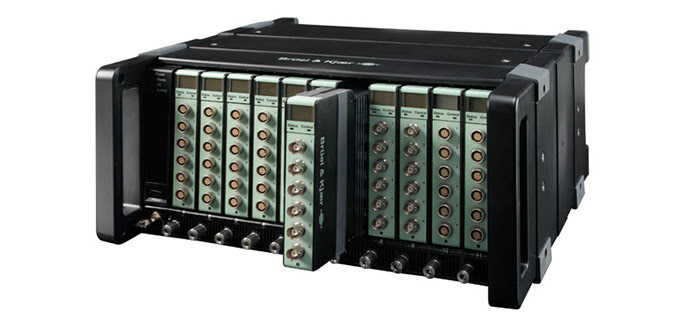
- In 2008, LAN-XI Data Acquisition Hardware was introduced. A versatile system of modular hardware, it can be used as a stand-alone, single-module front-end as part of a distributed module setup, or collected in eleven-module frames.
- In 2008, Brüel & Kjær acquired LDS Test and Measurement, the market leader in large vibration test systems for the global space industry. The acquisition of LDS added electrodynamic shakers, vibration tables/fixtures, amplifiers and Laser and Comet vibration controllers to Brüel & Kjær’s product range.
- In 2008, the alliance between Brüel & Kjær and ENDEVCO is discontinued
- In 2009, Australian company Lochard Ltd was acquired. The Lochard acquisition means we can provide customers with world-class Environment Management Solutions.
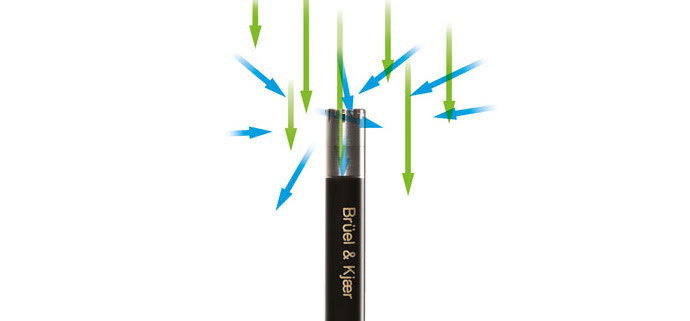
- In 2009, two major innovations were released: The world's first Multi-Field Microphone - Type 4961 - ensuring accurate measurements in free, diffuse and multi-field conditions; and PULSE Reflex - a new world-class post-processing solution
|
|